

Table of Contents
Introduction
Data Science training equips individuals with the knowledge and practical skills required to analyze data, extract insights, and support data-driven decision-making. It combines statistics, programming, machine learning, and business intelligence to prepare learners for modern analytics roles.
What Is Data Science?
Data Science is a multidisciplinary field that uses scientific methods, algorithms, and systems to analyze structured and unstructured data. It involves data collection, cleaning, analysis, visualization, and predictive modeling to solve real-world problems.
Why Data Science Training Is in High Demand
Rapid digital transformation across industries
Growing need for data-driven decisions
Shortage of skilled data professionals
High-paying career opportunities
Expansion of AI and machine learning technologies
Key Skills You Will Learn in Data Science Training
- Programming (Python, R)
• Data Analysis & Visualization
• Statistics & Probability
• Machine Learning Algorithms
• Data Cleaning & Wrangling
• SQL & Database Management
• Big Data Technologies
Eligibility Criteria for Data Science Training
- Basic knowledge of mathematics & statistics
• Familiarity with programming (preferred but not mandatory)
• Bachelor’s degree (for advanced programs)
• Analytical thinking skills
• Interest in data & problem-solving
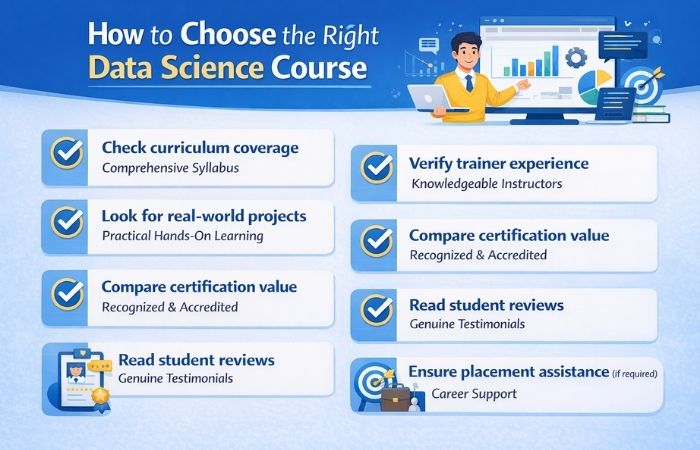
How to Choose the Right Data Science Course
Data Science Training Tools
| Tool / Technology | Category | Purpose | Skill Level |
| Python | Programming Language | Data analysis, machine learning, automation | Beginner to Advanced |
| R | Programming Language | Statistical computing and visualization | Intermediate |
| Jupyter Notebook | Development Environment | Interactive coding and data analysis | Beginner |
| SQL | Database Language | Managing and querying databases | Beginner to Intermediate |
| Tableau | Data Visualization Tool | Creating dashboards and reports | Beginner |
| Power BI | Business Intelligence Tool | Business analytics and reporting | Beginner |
| Microsoft Excel | Spreadsheet Tool | Basic data analysis and reporting | Beginner |
| TensorFlow | Machine Learning Framework | Deep learning model development | Advanced |
| Scikit-learn | ML Library (Python) | Machine learning algorithms | Intermediate |
| Apache Hadoop | Big Data Framework | Processing large datasets | Advanced |
| Apache Spark | Big Data Processing Engine | Fast large-scale data processing | Advanced |
Online vs. Offline Data Science Training
| Factor | Online Training | Offline Training |
| Flexibility | Learn anytime, anywhere | Fixed schedule |
| Cost | Generally more affordable | Usually higher due to infrastructure |
| Interaction | Virtual interaction via chat/video | Face-to-face classroom interaction |
| Networking | Limited peer networking | Strong networking opportunities |
| Learning Pace | Self-paced or live sessions | Instructor-paced |
| Accessibility | Global access to top instructors | Limited to local institutes |
| Practical Exposure | Virtual labs & assignments | Classroom labs & direct mentoring |
| Best For | Working professionals & remote learners | Students preferring structured learning |
Types of Data Science Training Programs
| Program Type | Duration | Ideal For | Key Features |
| Certificate Course | 3–6 months | Beginners | Fundamental concepts and tools |
| Diploma Program | 6–12 months | Career switchers | In-depth technical training |
| Postgraduate Program | 12–24 months | Graduates & professionals | Advanced curriculum with projects |
| Bootcamp | 8–16 weeks | Fast-track learners | Intensive, job-focused training |
| Corporate Training | Custom duration | Working professionals | Skill enhancement for teams |
| Self-Paced Online Course | Flexible | Independent learners | Pre-recorded modules and assignments |
Cost of Data Science Training Programs
| Program Type | Typical Cost (USD) | Typical Cost (INR Approx.) | Included Features |
| Online Self-Paced Course | $200 – $800 | ₹16,000 – ₹65,000 | Pre-recorded video lessons, assignments |
| Instructor-Led Online Course | $800 – $2,500 | ₹65,000 – ₹2,05,000 | Live sessions, mentorship, project reviews |
| Bootcamp / Intensive Program | $3,000 – $6,000 | ₹2,45,000 – ₹4,90,000 | Short, immersive hands-on training |
| Diploma Program | $3,000 – $10,000 | ₹2,45,000 – ₹8,15,000 | In-depth training + capstone projects |
| Postgraduate Program | $7,000 – $15,000+ | ₹5,70,000 – ₹12,25,000+ | College-level credential, extensive curriculum |
| Corporate Training | Customized | Customized | Team training, custom modules |
Conclusion
Data Science training opens doors to high-growth and high-paying career opportunities. With the right skills, tools, and practical experience, professionals can build a strong career in analytics, AI, and business intelligence across industries.
FAQs
Q1: Do I need coding knowledge to learn Data Science?
Basic programming knowledge is helpful but beginners can start with foundational courses.
Q2: How long does it take to complete Data Science training?
Typically 3–12 months depending on course type.
Q3: Is Data Science a good career choice?
Yes, it offers strong job demand, high salaries, and career growth.
Q4: Can non-IT students learn Data Science?
Yes, with dedication and structured learning, students from various backgrounds can transition into data science.